
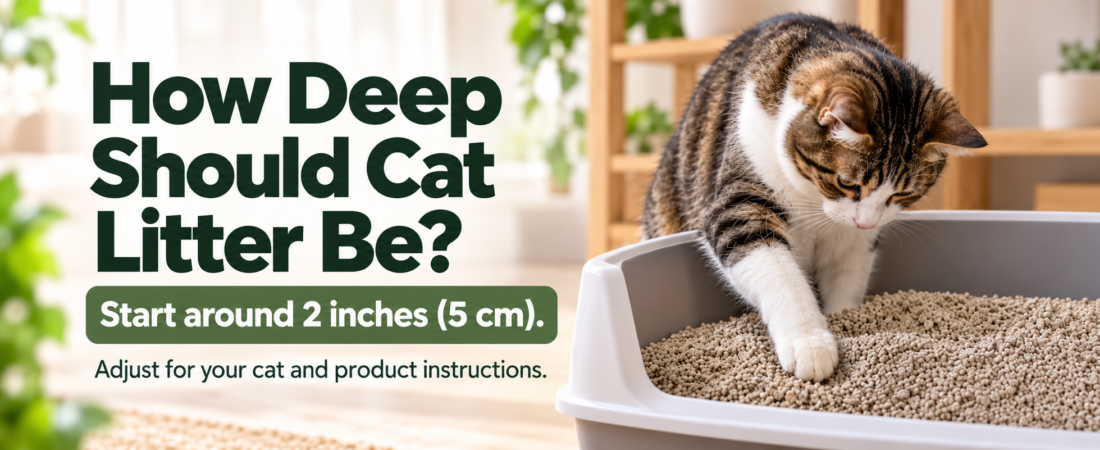
If you’ve ever poured a fresh bag of litter into the box and wondered whether you’ve added too much or too little, you’re not alone. How deep should cat litter be for comfortable digging, easy cleaning, and less mess?
For many cats, about 2 inches (5 cm) of litter is a useful starting point. Adjust for individual preferences and the product instructions.
Your cat’s digging habits, litter texture, box design, and even the number of cats using the box can affect how much litter works best.
The goal isn’t to hit an exact measurement. It’s to provide enough litter for comfortable digging and covering without filling the box so deeply that litter is unnecessarily wasted or constantly kicked onto the floor.
Quick Answer: How Deep Should Cat Litter Be?
Start with about 2 inches (5 cm) of litter, then observe your cat. ASPCA guidance describes a shallow 1–2-inch bed; adjust for your cat and the product instructions.
If your cat regularly digs all the way to the bottom, you may need a little more. If large amounts of clean litter are constantly being kicked over the sides, reducing the depth slightly may help.
Manufacturer recommendations should also be considered because different litter materials can behave differently.
Think of about 2 inches as a starting point rather than a strict rule.
Why Does Cat Litter Depth Matter?
Litter depth affects more than how quickly you empty a bag.
Cats naturally dig before and after eliminating. They need enough material to dig and cover waste comfortably.
At the same time, an excessively deep litter bed can create unnecessary mess and waste.
Finding a sensible depth can help with:
- Comfortable digging and covering
- Easier daily scooping
- Reducing unnecessary litter waste
- Limiting litter kicked over the sides
- Maintaining a more consistent litter box setup
Your cat’s behavior is usually the best indicator of whether the current depth is working.
What Happens If Cat Litter Is Too Shallow?
Using too little litter can make normal digging difficult.
Your cat may quickly reach the bottom of the box and begin scratching the plastic instead of moving litter.
Urine may also reach the bottom more easily, depending on the litter type and how your cat uses the box.
With clumping litter, maintaining sufficient depth can help give the litter enough material to form manageable clumps rather than allowing everything to stick against the bottom.
Signs the litter may be too shallow include frequent scratching at the bottom of the box or difficulty covering waste.
If you notice these behaviors, add a little more litter and observe whether things improve.
What Happens If Cat Litter Is Too Deep?
More litter isn’t automatically better.
An excessively deep litter bed gives enthusiastic diggers more material to move around. That can contribute to litter being kicked over the sides of the box.
It can also mean using more litter than necessary.
If your cat is constantly throwing litter onto the surrounding floor, depth is one of several things worth checking.
Our guide Why Does My Cat Kick Litter Out of the Box? covers other common causes, including box size, wall height, and litter characteristics.
Does Litter Type Change the Ideal Depth?
Yes. Different litter materials have different particle sizes, weights, and absorption characteristics.
That’s one reason a single measurement shouldn’t be treated as a universal requirement.
Clumping Litter
Clumping litter needs enough depth for your cat to dig comfortably and for soiled areas to form removable clumps.
Follow the litter manufacturer’s fill instructions. About 2 inches is a general starting point when no different depth is specified.
If you’re still deciding which litter style suits your household, see our Clumping vs Non-Clumping Cat Litter comparison.
Non-Clumping Litter
Non-clumping litter handles moisture differently and may require a different maintenance routine.
Instead of focusing only on depth, pay attention to how quickly the litter becomes saturated or develops odor.
Regular replacement is particularly important because urine isn’t removed as individual clumps.
Tofu and Pellet-Style Litter
Tofu, wood, and other pellet-style litters can behave differently from fine clay.
Because particle size and absorption vary considerably between products, follow the manufacturer’s recommended fill level where available.
Don’t assume that the same depth you used with clay will automatically be ideal for a completely different litter material.
How to Measure Cat Litter Depth
You don’t need special equipment.
When setting up a freshly cleaned box, spread the litter evenly. A ruler can help you check a depth of about 2 inches.
After that, you’ll probably be able to judge the amount visually.
More importantly, observe what happens over several days.
If your cat uses the box comfortably and you’re not constantly dealing with excessive litter outside the box, your current depth is probably working reasonably well.
Should You Keep Adding Fresh Litter After Scooping?
Yes, when necessary.
Daily scooping gradually removes some clean litter along with the soiled clumps.
Instead of waiting until the litter becomes noticeably shallow, add a small amount of fresh litter periodically to maintain approximately the depth that works for your cat.
This doesn’t mean continuously topping up old litter forever.
The litter box still needs periodic emptying and cleaning based on the litter type, manufacturer instructions, condition of the box, and how heavily it is used.
For a fuller maintenance routine, see How Often Should You Change Cat Litter?
Does a Bigger Litter Box Need Deeper Litter?
Not necessarily.
A larger litter box has more surface area, so reaching the same depth will naturally require a greater total volume of litter.
But the litter doesn’t need to become deeper simply because the box itself is larger.
Instead, maintain the depth your cat uses comfortably across the usable area of the box.
A larger box can actually help enthusiastic diggers by giving them more room to move litter without immediately throwing it over the edges.
How Deep Should Litter Be for Cats That Dig a Lot?
For a heavy digger, start with about 2 inches and watch your cat’s behavior.
Adding substantially more litter isn’t always the answer for a heavy digger. It may simply give the cat more material to throw around.
If litter frequently ends up outside the box, consider the entire setup:
- Box size
- Wall height
- Litter depth
- Particle size and weight
- Litter mat coverage
A larger or high-sided box may solve the problem more effectively than increasing litter depth.
Can Too Much Litter Cause Tracking?
Litter depth isn’t the only cause of tracking, but an overfilled box can increase the amount of loose litter available to be moved around.
Tracking primarily occurs when particles stick to paws or fur and travel away from the litter area.
Particle size, litter weight, your cat’s paws, and the surrounding setup all matter.
If you’re finding litter throughout the house rather than only beside the box, see our Best Cat Litter for Tracking guide.
What About Multi-Cat Homes?
Multiple cats can make litter box maintenance more demanding because boxes may receive heavier use.
Instead of simply adding deeper litter to compensate, focus on providing enough litter box resources and maintaining them consistently.
A commonly used starting guideline is one box per cat, plus one additional box, although the ideal setup depends on the cats and household.
Read How Many Litter Boxes Per Cat Do You Need? for a more detailed explanation.
Does More Litter Control Odor Better?
Not necessarily.
Adding an excessive amount of litter isn’t a substitute for scooping.
Odor control depends on several factors, including litter performance, waste removal, box cleanliness, ventilation, and how many cats are using the box.
If odor is the main problem, prioritize regular scooping and appropriate cleaning rather than simply pouring more litter into the box.
Our How to Stop Cat Litter Box Smell guide covers practical ways to improve odor management.
A Simple Way to Find the Right Depth for Your Cat
Start with about 2 inches.
Use that setup for several days while paying attention to your cat and the condition of the litter box.
If your cat frequently scratches the bare bottom, increase the amount slightly.
If excessive clean litter is constantly being kicked over the sides, try reducing the depth slightly while still leaving enough for comfortable digging.
Make small adjustments rather than dramatic changes.
Once you find a depth that works, maintaining roughly that level makes everyday litter box care much easier.
Frequently Asked Questions
How deep should cat litter be in inches?
For many cats, about 2 inches is a useful starting point. Adjust for your cat’s behavior, litter type, box design, and manufacturer recommendations.
Is 4 inches of cat litter too much?
Not automatically, but many cats may not need that much. If the box is producing excessive waste or your cat is throwing large amounts of litter outside, try a slightly shallower layer and observe the result.
Can cat litter be too shallow?
Yes. If there isn’t enough litter, your cat may reach and scratch the bottom of the box while digging. Depending on the litter, soiled material may also be more likely to contact the bottom.
Should I add litter every day?
You don’t necessarily need to add litter every day. Top it up as scooping gradually reduces the amount, maintaining approximately the depth that works for your cat.
Do cats prefer deep litter?
Individual cats can have different preferences. Instead of assuming deeper is always better, start with a moderate depth and observe how comfortably your cat digs and covers waste.
When Should You Change the Litter Depth?
Once you’ve found a setup that works, there usually isn’t a reason to constantly change it.
However, reconsider the depth if you switch to a substantially different litter material, change litter boxes, or notice your cat’s normal digging behavior changing.
A sudden change in litter box habits should not automatically be blamed on litter depth. Contact your veterinarian promptly about new avoidance, discomfort, or urination outside the box. If your cat strains to urinate but passes little or no urine, seek emergency veterinary care immediately. Cornell explains why suspected urinary obstruction is an emergency.
For additional guidance on litter box setup and common litter box problems, see the ASPCA’s litter box guidance.
Final Thoughts
So, how deep should cat litter be?
For many households, around 2 inches is a sensible starting point, but your cat should have the final say.
Watch how your cat digs, whether they reach the bottom of the box, how much litter gets kicked outside, and how easily you can maintain the box.
The best depth is ultimately the amount that gives your cat enough material to dig and cover comfortably while keeping cleaning and litter waste manageable.