
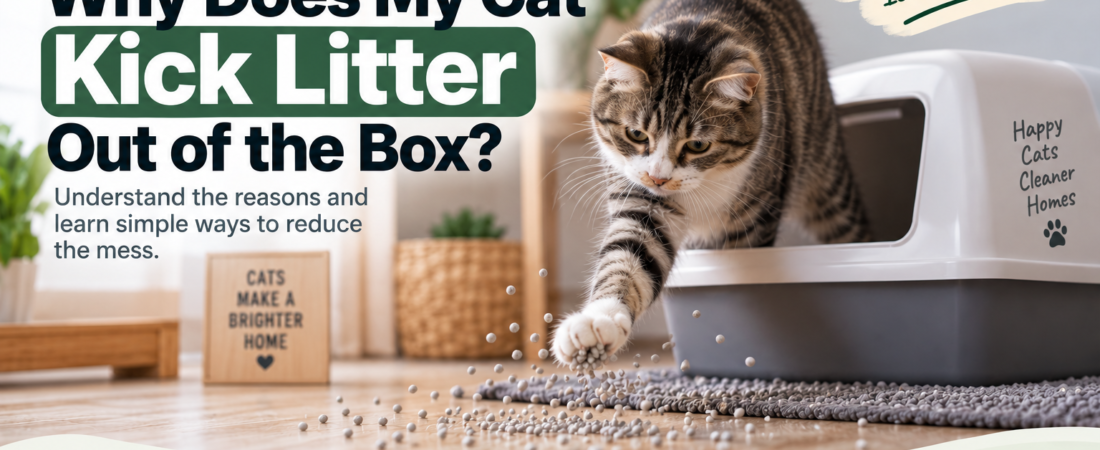
If you regularly find cat litter scattered across the floor, you may be wondering: why does my cat kick litter out of the box?
In many cases, the answer is surprisingly simple. Cats naturally dig before and after using their litter box, and some cats are simply more enthusiastic diggers than others.
However, excessive litter kicking can also be influenced by the size and design of the litter box, how much litter you use, the type of litter, and even where the box is placed.
The good news is that a few simple changes can often reduce the mess without interfering with your cat’s normal litter box habits.
If you keep asking why does my cat kick litter out of the box, start by looking at the box size, litter depth, and the type of litter you use.
Why Does My Cat Kick Litter Out of the Box?
Cats have a natural instinct to dig and cover their waste. During this process, litter can easily be pushed or kicked over the sides of the box.
Some cats dig gently, while others vigorously move litter around before finding the perfect spot.
Common reasons include:
- Natural digging and covering behavior
- A litter box that is too small
- Sides that are too low
- Too much litter in the box
- Lightweight or fine litter
- Playful digging
- An unsuitable litter box setup
Understanding which factor is causing the mess can help you choose the simplest solution.
1. Your Cat Is Following Natural Digging Instincts
Digging is a normal part of litter box behavior.
Cats commonly scratch at the litter before eliminating and then dig again afterward to cover their waste.
Some cats perform only a few scratches. Others dig much more aggressively.
If your cat is otherwise using the litter box normally, occasional litter being kicked outside the box is usually part of everyday litter box use.
Instead of trying to stop the digging completely, focus on creating a setup that better contains the litter.
2. The Litter Box May Be Too Small
A small litter box gives your cat less room to turn around and dig.
When your cat scratches near the edges, litter can easily fly over the sides.
A larger box provides more usable digging space and allows your cat to move around without constantly pushing litter against the walls.
This becomes particularly important for larger cats.
For multi-cat households, check our Best Litter Boxes for Multiple Cats guide for larger litter box options.
3. The Sides of the Box Are Too Low
Low-sided litter boxes are easy to enter, but they provide very little protection against flying litter.
If your cat is an enthusiastic digger, a high-sided box can help contain much of the litter that would otherwise land on the floor.
However, accessibility still matters.
Kittens, senior cats, and cats with mobility difficulties may benefit from a lower entrance even when the remaining sides are higher.
4. You May Be Using Too Much Litter
More litter isn’t always better.
When a litter box is filled too deeply, your cat has more material available to push over the sides.
Try maintaining enough litter for comfortable digging and waste coverage without filling the box excessively.
The ideal amount can vary depending on the litter and your cat’s preferences, so manufacturer guidance can also be useful.
We’ll cover litter depth in more detail in our upcoming guide on How Deep Should Cat Litter Be?
5. Lightweight Litter Can Scatter More Easily
The physical characteristics of the litter can make a difference.
Very lightweight or fine particles may be easier to kick out of the box than heavier or larger granules.
They can also stick to paws and travel beyond the immediate litter area.
If litter is appearing throughout your home rather than only beside the box, our Best Cat Litter for Tracking guide covers options designed to help reduce tracking.
6. Your Cat May Simply Love Digging
Some cats really enjoy digging.
You might notice your cat spending extra time scratching, rearranging litter, or digging around several areas of the box.
If the behavior isn’t accompanied by other problems, the most practical solution may simply be better litter containment.
A larger high-sided box and litter mat can make a significant difference without preventing your cat from digging naturally.
7. The Litter Box Setup May Need Improvement
Sometimes the problem isn’t your cat or the litter—it’s the overall setup.
A cramped litter area can make it difficult for your cat to enter, turn, dig, and exit comfortably.
Try placing the box somewhere with enough surrounding space while still providing your cat with reasonable privacy.
In multi-cat homes, also make sure there are enough boxes available.
Our guide How Many Litter Boxes Per Cat Do You Need? explains the commonly used cats-plus-one starting guideline.
How to Fix It When Your Cat Kicks Litter Out of the Box
You probably won’t eliminate every piece of scattered litter, but you can often reduce the mess substantially.
Try a Larger Litter Box
Giving your cat more room to dig helps keep activity toward the center of the box rather than along the edges.
Make sure your cat can comfortably enter, turn around, dig, and position themselves inside.
Consider a High-Sided Box
Higher walls provide a physical barrier against litter being kicked sideways.
For cats that need easier access, look for designs that combine high walls with a lower entrance.
Add a Large Litter Mat
A litter mat won’t prevent litter from leaving the box, but it can catch particles immediately outside it.
Choose a mat large enough that your cat has to take several steps across it when exiting.
Experiment With Litter Depth
If the box contains a very deep layer of litter, try reducing it gradually.
The goal is to provide enough material for digging and covering without creating an unnecessarily large amount that can be thrown outside.
Consider a Different Litter
If your current litter scatters easily, experimenting with a heavier or larger-grain formula may help.
Make litter changes gradually when possible so your cat has time to adjust to the new texture.
Would a Covered Litter Box Solve the Problem?
A covered litter box can contain litter kicked upward or sideways, but it isn’t automatically the best solution for every cat.
Some cats are comfortable using enclosed boxes, while others may prefer a more open environment.
Covered boxes also still require regular scooping and cleaning.
If your cat already uses an open box reliably, a high-sided open box may provide a useful compromise between containment and accessibility.
What About Top-Entry Litter Boxes?
Top-entry boxes can provide excellent physical containment because most of the box is surrounded by high walls.
The cat enters and exits through an opening in the lid.
However, they aren’t appropriate for every cat. Cats with limited mobility, some senior cats, and very young kittens may find the entry design more difficult.
Choose a box based on your individual cat rather than containment alone.
Kicking vs. Tracking: What’s the Difference?
These problems can look similar but happen differently.
Kicking happens when litter is physically thrown outside the box while your cat digs.
Tracking happens when litter sticks to your cat’s paws or fur and is carried away after leaving the box.
If most litter is concentrated immediately beside the box, kicking may be the main issue.
If you find litter in hallways, bedrooms, or other parts of your home, tracking may be contributing more to the mess.
Often, households experience both.
Keep the Litter Box Clean
Regular scooping can also make the box easier for your cat to use.
When a box contains multiple soiled areas, a cat may dig around more extensively while searching for a clean spot.
Try scooping at least daily and adjust the frequency depending on how many cats use the box and how quickly it becomes dirty.
For a more complete maintenance routine, read How Often Should You Change Cat Litter?
When a Change in Litter Box Behavior Deserves Attention
Scattering some litter during normal digging is one thing. A sudden and significant change in litter box behavior is different.
Pay attention if your cat suddenly starts avoiding the box, repeatedly entering without normal elimination, eliminating outside the box, appearing uncomfortable, or showing other unusual behavior.
Changes like these shouldn’t automatically be treated as a litter-box-design problem. Consider contacting a veterinarian for advice, particularly when the change is sudden or persistent.
For more information about litter box problems and possible causes, see the ASPCA’s guide to litter box problems.
Understanding why does my cat kick litter out of the box can help you choose a solution that reduces mess without interfering with normal digging behavior.
Frequently Asked Questions
Is it normal for cats to kick litter out of the box?
Yes. Some litter scattering can happen naturally when cats dig and cover their waste. The amount varies between individual cats and litter box setups.
Will a bigger litter box reduce litter kicking?
It can help. A larger box gives your cat more room to dig away from the edges, although box size alone won’t eliminate every piece of scattered litter.
Are high-sided litter boxes better for messy cats?
High sides can help contain litter kicked during digging. Just make sure your cat can comfortably enter and exit the box.
Why does my cat dig so much in the litter box?
Some cats naturally dig more than others. Box size, cleanliness, litter depth, and litter texture may also influence how much digging occurs.
Can a litter mat stop litter from going everywhere?
A litter mat can catch some of the litter that leaves the box or sticks to your cat’s paws. It works best when it is large enough to cover the main exit area.
Final Thoughts
So, why does my cat kick litter out of the box?
Most of the time, digging and covering are simply normal cat behaviors. The mess becomes more noticeable when the litter box is small, the walls are low, the litter is easy to scatter, or the box contains more litter than necessary.
Rather than trying to stop your cat from digging, make the environment work with that behavior.
A larger high-sided litter box, sensible litter depth, low-tracking litter, and a good litter mat can go a long way toward keeping the surrounding floor cleaner while allowing your cat to use the box comfortably.