
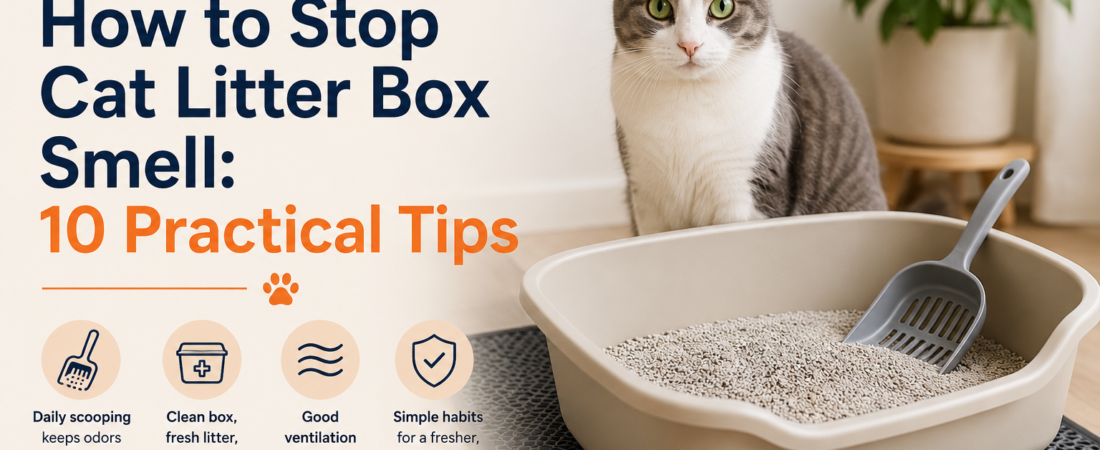
A litter box will never be completely odor-free, but strong smells that linger throughout your home usually mean something in the litter box routine could be improved.
The good news is that controlling litter box odor does not necessarily require complicated products or constantly replacing all the litter. Simple changes to scooping frequency, litter depth, box placement, cleaning, and the number of litter boxes can make a noticeable difference.
In this guide, we’ll explain how to stop cat litter box smell with practical steps you can use in both single-cat and multi-cat homes.
Affiliate Disclosure: PurrNexa may earn a commission from qualifying purchases made through links on this page, at no additional cost to you.
Why Does a Cat Litter Box Smell So Bad?
Most litter box odor comes from urine and feces remaining in the box long enough for unpleasant smells to build up.
Urine odor can become particularly noticeable as waste accumulates and ammonia-related odors develop. Moisture trapped in dirty litter can make the problem worse.
Several factors can contribute to persistent litter box odor:
- Infrequent scooping
- Too little litter
- Litter that does not control odor effectively
- An overdue full litter change
- Waste stuck to the bottom or sides of the box
- Poor ventilation around the litter box
- Too few litter boxes for the number of cats
- A litter box that has absorbed odors over time
Rather than trying to cover these smells with strong fragrances, it is usually better to address the source.
1. Scoop the Litter Box Every Day
Regular scooping is one of the simplest ways to reduce litter box odor.
Remove urine clumps and solid waste at least once per day. In a busy multi-cat household, checking the boxes more frequently may be helpful.
Leaving waste in the litter for several days gives odors more time to develop and makes the remaining clean litter less pleasant to use.
A consistent scooping routine also makes it easier to notice unusual changes in litter box use.
2. Maintain Enough Clean Litter
Using too little litter can allow urine to reach the bottom of the box before it forms a complete clump.
That can leave wet litter stuck to the base of the box and make cleaning more difficult.
Maintain an appropriate litter depth according to the litter manufacturer’s directions and your cat’s preferences. After removing clumps, top up the box with fresh litter when necessary instead of waiting until the level becomes very low.
More litter is not always better, however. An excessively deep layer can create unnecessary waste and may not suit every cat.
3. Choose a Litter With Effective Odor Control
Different litters manage odor in different ways.
Some use highly absorbent clay, while others incorporate activated charcoal, baking soda, plant-based materials, or other odor-control technologies.
The best option depends on your household. For example, a multi-cat home may need stronger odor management than a household with one cat and several litter boxes.
If odor control is your main priority, see our Best Cat Litter for Odor Control guide for a comparison of several options.
Internal link:https://purrnexa.com/best-cat-litter-for-odor-control/
Don’t rely only on fragrance. A strongly scented litter may mask odor temporarily without addressing waste and moisture inside the box.
4. Replace the Litter When It Is No Longer Fresh
Scooping removes concentrated waste, but it does not keep the remaining litter fresh indefinitely.
Small pieces of contaminated litter can remain behind, and eventually the entire box may begin to smell even immediately after scooping.
When that happens, replace the old litter and clean the box before adding fresh litter.
How frequently this is necessary depends on the type of litter, number of cats, size of the box, scooping routine, and manufacturer instructions.
For a more detailed schedule, read How Often Should You Change Cat Litter?
Internal link:https://purrnexa.com/how-often-should-you-change-cat-litter/
5. Clean the Litter Box Regularly
A full litter change is a good opportunity to clean the box itself.
Empty the litter, remove residue, and wash the box using an appropriate cleaning method. Make sure the box is thoroughly dry before adding fresh litter.
Avoid leaving heavily scented cleaning residue inside the box. Cats have a much stronger sense of smell than humans, and an overpowering scent may make the litter box less appealing.
Always follow the litter box manufacturer’s cleaning instructions, particularly for automatic litter boxes or boxes containing electronic components.
6. Keep the Area Around the Box Clean
Sometimes what appears to be litter box odor is actually coming from the surrounding area.
Litter, urine droplets, or waste can occasionally end up outside the box. Regularly vacuum or sweep tracked litter and clean any soiled surfaces around the litter box.
A litter mat can help capture particles carried out on your cat’s paws, although it still needs regular cleaning.
Also inspect the wall and floor around the box if odors continue after the litter itself has been replaced.
7. Improve Ventilation Without Hiding the Box Away
A litter box placed in a small, enclosed area can concentrate odors.
Whenever practical, choose a location with reasonable airflow while still giving your cat privacy and easy access.
Avoid placing the litter box somewhere that becomes excessively hot, damp, difficult to reach, or easy for another pet to block.
The goal is not simply to hide the litter box as far away as possible. A convenient box is easier for both the cat to use and the owner to maintain.
8. Provide Enough Litter Boxes for Multiple Cats
More cats mean more waste.
A commonly used starting guideline is one litter box per cat plus one additional box, although the ideal setup depends on your cats, available space, and household layout.
Multiple boxes distribute waste and can make it easier to keep each box clean.
For households with several cats, our Best Cat Litter for Multiple Cats guide compares litter options designed around the challenges of heavier litter box use.
Internal link:https://purrnexa.com/best-cat-litter-for-multiple-cats/
9. Consider an Unscented Litter
It may seem logical to use the strongest fragrance available when a litter box smells, but fragrance and odor control are not the same thing.
Some owners and cats prefer unscented litter. Instead of adding perfume, these products may rely on absorbency, clumping, activated charcoal, or other approaches to managing odor.
If you want odor control without added fragrance, see our Best Unscented Cat Litter comparison.
Internal link:https://purrnexa.com/best-unscented-cat-litter/
The important part is finding a litter that works well with your cleaning routine and that your cat will reliably use.
10. Know When the Litter Box Itself Needs Replacing
Plastic litter boxes do not necessarily last forever.
Scratches from repeated digging and cleaning can develop over time. These worn surfaces may become increasingly difficult to clean thoroughly.
If an older box continues to smell shortly after being washed and filled with fresh litter, inspect its condition.
Replacement may be worth considering if the surface is heavily scratched, damaged, cracked, or difficult to keep clean.
What About Baking Soda and Litter Deodorizers?
Odor-control products can be useful in some households, but they should complement good litter box maintenance rather than replace it.
Before adding baking soda, deodorizer, fragrance products, or other additives, check whether they are appropriate for the litter you use and follow the product instructions.
More fragrance does not necessarily mean better odor control.
Your priority should remain:
remove waste → manage moisture → maintain clean litter → clean the box → keep the surrounding area clean.
Common Litter Box Odor Mistakes
A few habits can make odor problems harder to solve:
Waiting for the box to smell before scooping.
By then, waste may already have been sitting for a significant period.
Only adding fresh litter on top of old litter.
Topping up is useful between changes, but it cannot indefinitely replace cleaning and changing the litter.
Using fragrance to cover persistent odor.
Masking the smell does not remove its source.
Keeping too few boxes in a multi-cat household.
Heavy use can overwhelm a single box quickly.
Ignoring the litter box itself.
Even excellent litter cannot compensate for a dirty or damaged box.
When Odor Changes Suddenly
If your normal litter box routine has been working well and the smell suddenly becomes unusually strong or different, pay attention to what else has changed.
Changes in litter, food, cleaning frequency, number of cats using the box, or the box location can all affect odor.
If you notice persistent unusual changes in your cat’s urination, bowel movements, litter box habits, appetite, behavior, or general condition, consider contacting a veterinarian rather than treating the issue only as an odor-control problem.
A Simple Odor-Control Routine
For many households, litter box odor management can be kept relatively simple:
Daily: Scoop waste and check the litter level.
As needed: Top up with clean litter and clean tracked litter around the box.
Periodically: Replace the litter according to its condition, your household usage, and manufacturer guidance.
During a full change: Clean and dry the litter box before refilling it.
Regularly: Check the condition of the box, mat, surrounding floor, and litter scoop.
Consistency usually matters more than adding numerous odor-control products.
Final Thoughts
Learning how to stop cat litter box smell starts with managing the source rather than trying to hide it.
Daily scooping, appropriate litter depth, regular cleaning, sufficient litter boxes, good ventilation, and a litter that performs well for your household can make litter box maintenance much easier.
For more help choosing the right setup, explore our guides to the Best Cat Litter for Odor Control, Best Cat Litter for Multiple Cats, and Best Unscented Cat Litter.
A clean litter box is not just about keeping your home smelling better. It also creates a cleaner, more comfortable litter area for your cat.